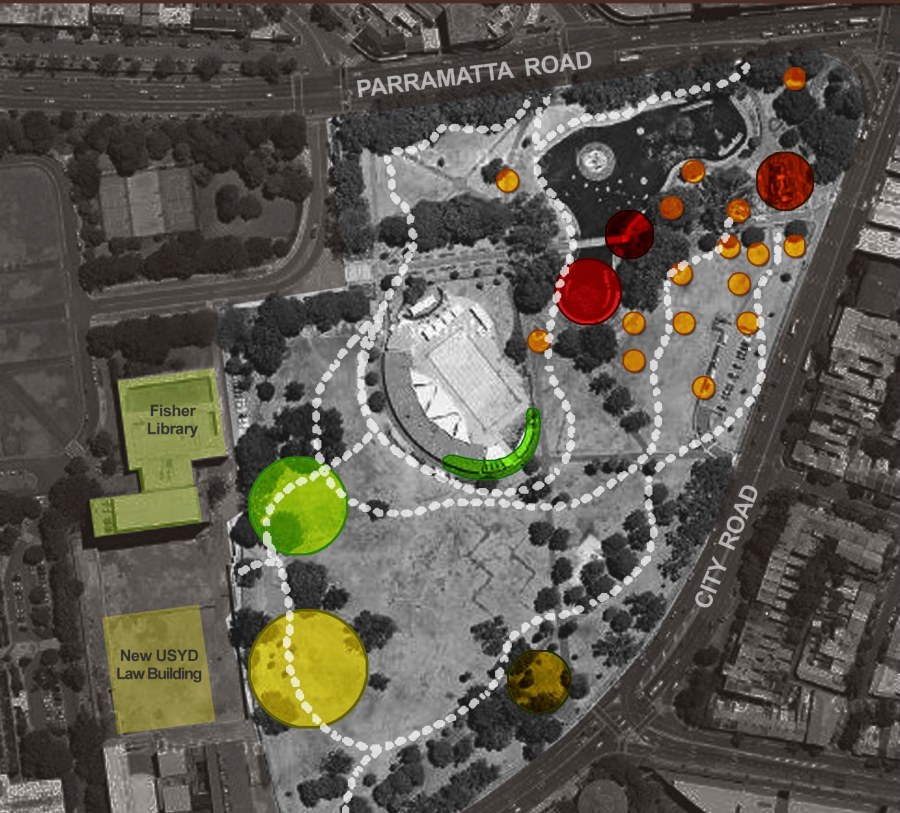
The Victoria Park Design Project was the trigger for the research called:
The project started in 2008, when the late architect Col James, a senior lecturer at the University of Sydney, initiated a collaborative design project celebrating Aboriginal culture in Victoria Park, an historic public park on the outskirts of Sydney’s CBD. This was supported by many in the local Aboriginal community, but as the project progressed others expressed concern about the consultation process.
I knew that that poor consultation had caused failure in design projects in the past. As a partner in this design project, I was interested in finding out how to navigate the process when people have different ideas on how to go about the design consultation process. I reviewed some existing consultation guidelines and found that most are written for regional or remote areas an there is little information available for navigating urban, contested locations. The research project “Aboriginal Stories of Victoria Park: Negotiation, consultation and engagement: Navigating design consultation on colonised and contested urban land” addressed those gaps in my understandings of design process by asking:
• whose voices, ways of knowing and conferring authority are given precedent in consultation guidelines for design projects celebrating Aboriginal culture on colonised and urban land;
• how might such design projects best be negotiated.
The research used an “outsider’s” decolonising methodology where “outsider” means someone from outside the community being research. The method was informed by authors Linda Tuhiwai-Smith and Michel Foucault. This approach aimed to hear and document previously unheard or undocumented voices of Aboriginal Elders and Aboriginal and non-aboriginal designers. Existing consultation guidelines were critically studied to identify the themes, world views, standpoints and agendas that informed them and these findings were then compared together.
The research confirmed that consultation for Aboriginal design projects in contested and urban locations is a complex process requiring specialised skills, strategies and competencies to account for and accommodate for historically unequal power relationships between Aboriginal peoples and non-aboriginal people in such environments.
The thesis re-framed and re-presented this knowledge, revealing new understandings about design praxis that move towards the increased inclusion of Aboriginal peoples’ voices, perspectives and practices in the design consultation process. To view the thesis, clink on the thesis title above.
 Spin 1 Design